View Our Results
View Our Results
-
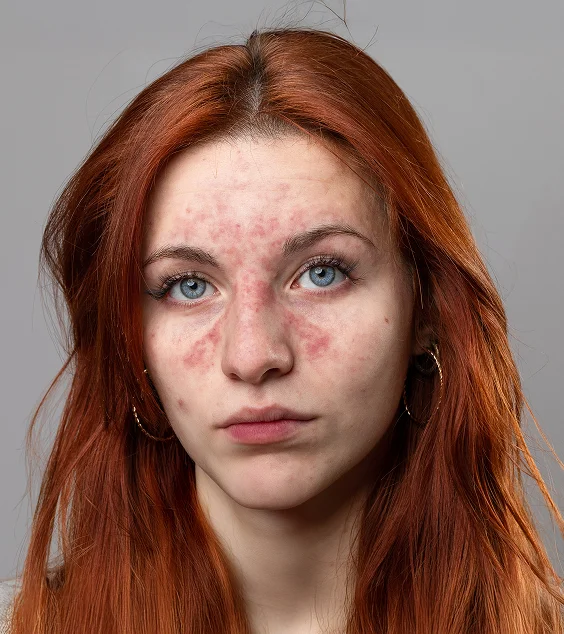 BBefore
 AAfter
 -
BBeforeAAfter
Laser technology is improving at an increasingly rapid rate every year. Providers can now target specific skin concerns, such as acne, surgical and burn scars, sun damage and actinic keratosis, with greater precision through personalized treatments. At The Center for Laser and Skin Surgery in Hermosa Beach, near Los Angeles, we offer patients of all backgrounds and skin tones Fraxel laser treatment, an FDA-approved, non-invasive, fractional laser therapy that addresses their skin concerns by treating microscopic skin columns, stimulating collagen, and leaving surrounding tissue intact.
Visit The Center for Laser and Skin Surgery for a Fraxel laser consultation and achieve healthier, smoother skin for a refreshing boost.
Fraxel laser treatment differs from other laser treatments because of its use of targeted fractional laser technology. Every laser treatment resurfaces skin to produce smoother, more even skin through combining light energy, heat, and the body’s natural healing response, and often targets the entire skin surface.
Fraxel laser treatment differs from this approach, as the laser system sends the laser into thousands of microscopic treatment zones. Because the Fraxel laser is so precise in treating specific, targeted areas, it avoids affecting surrounding tissue. This provides deep collagen stimulation and allows patients to recover more quickly with fewer, milder side effects, such as reduced redness and swelling.
The Fraxel laser uses a “pixelated” approach, treating only 33% of the skin at a time to ensure faster healing and more targeted results. Its unique dual-wavelength capability combines two lasers: a 1927 nm laser to target superficial pigmentation, such as melasma and actinic keratosis (precancerous spots), and a 1550 nm laser to penetrate deeper layers to address acne scars, deep wrinkles, and skin texture issues, all in one session.
The Fraxel laser is highly customizable, so its depth and intensity can be adjusted based on individual medical needs, goals, skin tone, and desired results.
Sun exposure over time doesn’t just give you a nice tan. It can also negatively impact your skin, leading to harmful conditions, such as actinic keratosis. This can look like rough, scaly patches, a common early warning sign that you may be developing skin cancer.
The Fraxel laser is an effective method to treat actinic keratosis. By delivering controlled thermal energy to the targeted areas, Fraxel laser triggers the body’s immune response to eliminate precancerous cells and replace them with newer, healthier tissue.
Due to the advanced technology of the Fraxel laser and its ability to target only a fraction of the skin, you’ll be able to heal much quicker compared to methods with full-field resurfacing.
New research suggests YES. Emerging research indicates that nonablative fractional laser (NAFL) treatments—commonly used for skin rejuvenation—may play a key role in preventing future facial skin cancers. Studies suggest these lasers can reduce the incidence of basal and squamous cell carcinomas by about 50% in high-risk patients by treating sun-damaged cells before they turn cancerous. This minimally invasive, low-downtime procedure offers a promising, proactive approach to long-term skin health.
(Benson TA, et al. Nonablative Fractional Laser Treatment Is Associated With a Decreased Risk of Subsequent Facial Keratinocyte Carcinoma Development. Dermatol Surg. 2023 Feb. PMID: 36728065.)
Fraxel laser treatment also effectively treats several types of scars from severe acne, burns, and surgery.
For acne scars, the high-energy columns break down dense scar tissue and stimulate collagen production to lift atrophic scars, blending them into the surrounding skin. The Fraxel laser can effectively treat rolling, boxcar, and ice-pick acne scars. For surgical and trauma scars, the Fraxel laser targets deep collagen fibers to flatten raised (hypertrophic) scars and remodel skin texture, effectively minimizing their appearance. For burn scars, the Fraxel laser’s fractional technology creates thousands of microscopic, deep columns of heat in the scar tissue to soften tight, contractive burn scars and enhance the range of motion.
Another medical benefit of the Fraxel laser is its ability to treat stubborn pigmentation issues like melasma, which is typically difficult to treat due to its pigmentation deep beneath the skin and hormonal triggers. Fraxel is effective at treating melasma because of its dual-wavelength technology, utilizing 1550 nm and 1927 nm lasers to penetrate deeper layers and epidermal pigmentation, stimulating collagen production and reducing surface-level discoloration. Treating melasma at multiple skin depths yields more comprehensive, long-lasting results.
Dr. Chelsea Fidai is a double-board-certified dermatologist with the American Board of Dermatology (ABD) and Mohs micrographic surgeon based in Hermosa Beach, near Los Angeles. Her philosophy of providing exceptional dermatologic care is founded on the principles of expertise, trust, and a thoughtful physician-patient partnership.
The Center for Laser and Skin Surgery combines surgical precision, cosmetic artistry, and modern technology to ensure every patient achieves optimal results with minimal downtime. When you get a laser resurfacing treatment with the Fraxel laser at The Center for Laser and Skin Surgery, you can rest assured that Dr. Fidai and our team will personalize your treatment to meet your unique goals, skin condition, lifestyle, and expectations.
Are you ready for a Fraxel laser resurfacing treatment to get rid of acne scars, fine lines, wrinkles, sun damage, and other skin concerns? Schedule a consultation with Dr. Fidai at The Center for Laser and Skin Surgery in the Hermosa Beach and Los Angeles area. Discover how this technology acts as a comprehensive multitasker for your skin, bridging the gap between medical necessity and cosmetic luxury.
View Our Results
BBeforeAAfter BBeforeAAfter